

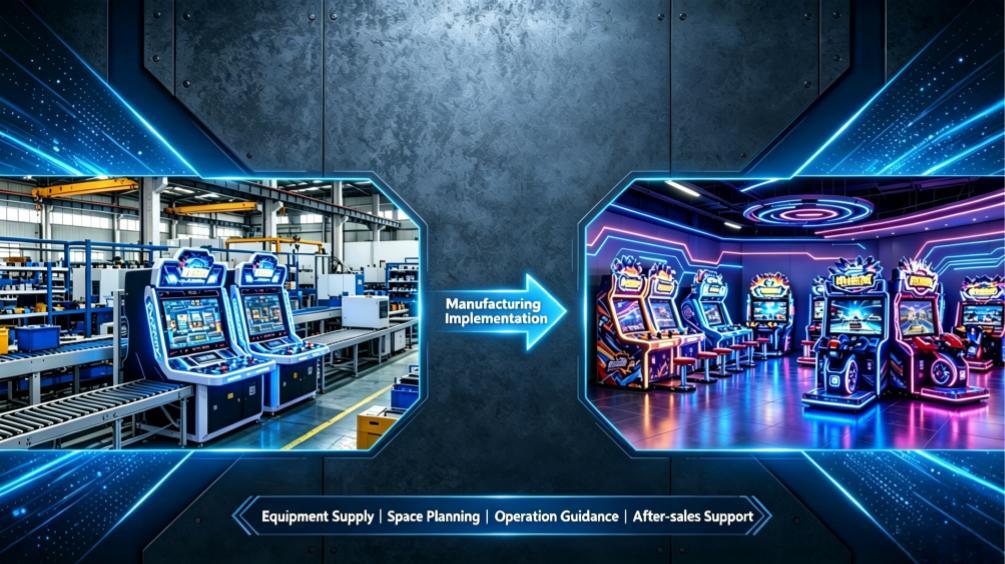
In recent years, the competition in the domestic large-scale gaming and amusement equipment industry has intensified, and market competition has become more cut-throat. Going global has become an important path for many manufacturing enterprises to break through development bottlenecks. As the core hub of the domestic game console industry, Guangdong has gathered a large number of integrated R&D and production factories, as well as a complete upstream and downstream supply chain. This has enabled domestic large-scale game consoles to possess strong global competitiveness in terms of cost-effectiveness and customization capabilities.
Based on market feedback, demand in Southeast Asia, the Middle East, and Latin America continues to grow. Local commercial complexes, video game districts, and family entertainment venues are expanding, leading to a steady increase in orders for racing, shooting, gift machines, and large-scale simulation game consoles. Many manufacturers have adjusted their business structures, strengthened their foreign trade teams, improved product international certification, and adapted to different countries' electrical and safety standards.
Industry practitioners indicate that expanding overseas involves more than just selling equipment abroad. It also requires addressing challenges such as overseas after-sales maintenance, logistics, and adapting to local business practices. In the past, many factories only engaged in simple OEM production. Nowadays, an increasing number of enterprises are emphasizing independent research and development, patent layout, and building their own brands. The industry predicts that the proportion of overseas markets will continue to increase in the next two years, and manufacturing enterprises with compliance certifications and comprehensive after-sales service systems will gain a greater advantage in global competition.




 Scan to add on WeChat